
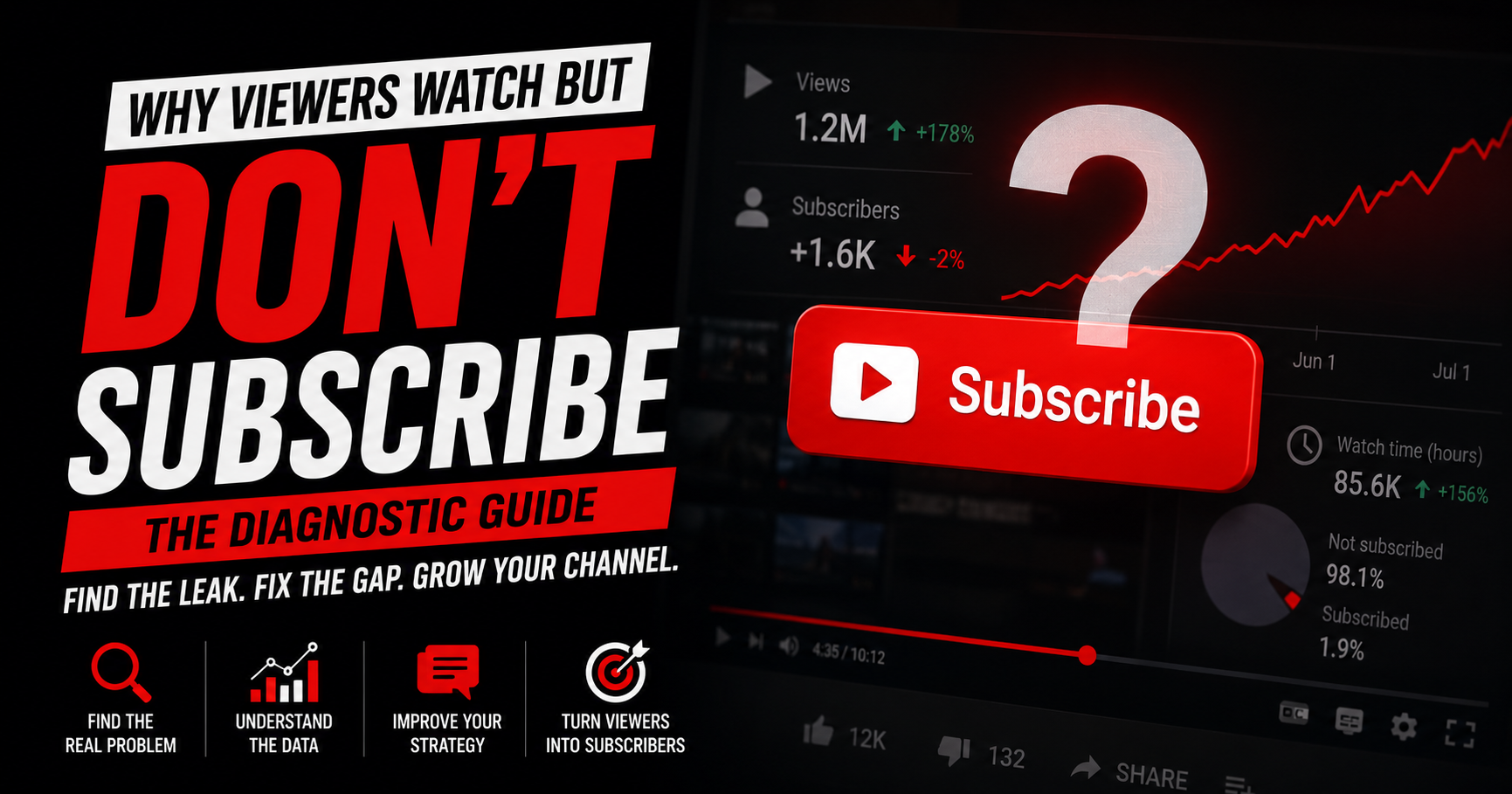
Why People Watch Your Videos But Never Subscribe (and How to Fix It)
Getting decent views but watching your subscriber count crawl is one of the most demoralizing patterns on YouTube. You're not alone - most creators searching for how to get more YouTube subscribers are stuck in the same loop. The gap between someone watching a video and someone hitting subscribe is real, and it has specific causes that have nothing to do with hard work or video quality.
This guide diagnoses why viewers watch but don't subscribe - six concrete reasons - then gives you a fix-it plan that lifts conversion without bots, sub-for-sub, or any shady tactic. Realistic expectations included.
Quick Answer
People watch but don't subscribe because they don't see a clear reason to come back, your subscribe ask is weak or mistimed, they're one-off search viewers, your content feels inconsistent, your branding is weak, or trust hasn't formed yet. Fix it by defining a sharp channel promise, asking for the subscribe after delivering value, strengthening your channel page, and building a binge-worthy content ecosystem. Subscribe rates are naturally a small share of views - not every viewer should subscribe.
Why Do People Watch Without Subscribing? The Real Gap Explained
Watching and subscribing are two completely different decisions. A viewer watches because the title and thumbnail interested them enough to click. Subscribing is a future commitment - they're betting that more of your content will be worth their time. Most creators ask for the subscribe before they've earned that bet. Others have great videos but no clear identity that makes the channel feel worth following. Either way, the gap isn't about your content quality alone; it's about whether a viewer leaves your video knowing exactly what they're signing up for if they hit subscribe.
What Are the Real Reasons Viewers Don't Hit Subscribe?
Six specific reasons account for most of the watch-but-don't-subscribe gap. You can usually pinpoint which ones apply to your channel by watching a few of your own videos as if you were a new viewer.
1. They don't see a clear reason to come back
Your channel doesn't make a clear promise about what subscribing gets them. "Subscribe for more content" tells viewers nothing. "Subscribe for weekly tutorials on landscape photography" is a real promise. Without a sharp promise, even satisfied viewers don't see the future value of clicking subscribe - so they don't.
2. Your subscribe ask is weak or badly timed
Asking for the subscribe in the first 10 seconds - before delivering any value - is the most common conversion killer. Viewers haven't decided you're worth following yet. The strongest subscribe ask comes after the payoff: "If this helped, subscribe - every Tuesday I break down one more." Give a reason, not a request.
3. They're one-off search viewers who got their answer
Search-driven viewers came for a specific answer. Once they have it, most leave - and that's normal. A how-to video pulling from "how to fix [thing]" search queries will always have a lower subscribe rate than identity-driven content. This isn't a bug; it's the nature of search traffic. Adjust expectations, not the content.
4. Your content feels random or inconsistent
If your last 5 uploads cover wildly different topics, viewers can't predict what subscribing means. Channel consistency - topic, format, tone - is what makes the subscribe button feel like a clear commitment. Random feels like noise. Predictable variety within a clear theme feels like a publication worth following.
5. Weak channel branding and visual identity
When viewers click your channel name to check it out, what do they see? A blank banner, no trailer, no clear playlists, and a thumbnail style that varies per video tells them this isn't a serious channel. Branding signals investment. Investment signals "this creator will still be uploading next month."
6. Low trust or personality connection
Subscribing is partly an emotional decision. Viewers subscribe to creators they feel a connection to - through voice, perspective, expertise, or personality. Channels that feel anonymous, formulaic, or interchangeable struggle to convert even with great information. Bring a clear point of view; it earns subscriptions more than perfect production.
How Do You Fix the Watch-But-Don't-Subscribe Gap?
Apply this five-step fix-it plan in order - each step compounds the next:
1. Define a sharp channel promise. Write one sentence: "This channel helps [audience] do/learn/achieve [outcome] through [format/cadence]." Put it in your channel description, trailer voiceover, and every video's verbal pitch when you ask for the subscribe. Sharpness beats cleverness.
2. Ask for the subscribe after delivering value - with a real reason. Place the subscribe ask near the payoff moment, not the intro. Tie it to a specific benefit: "If this finance breakdown helped, subscribe - I post one every Tuesday." Reasons convert; generic requests don't.
3. Strengthen your channel page. Upload a 30-60 second channel trailer that states your promise, organize your best uploads into 3-5 thematic playlists, set a clear banner with your topic and cadence, and write a compelling about-page paragraph. Most creators ignore the channel page - viewers absolutely don't. Our companion guide on how to brand your YouTube channel covers banner, trailer, and about-page design in depth.
4. Use end screens and a binge-worthy ecosystem. End every video with an end-screen suggestion that points to your most relevant next video, not your newest. Use playlists so YouTube auto-plays the next related video. The more time a viewer spends across your channel in one session, the higher the subscribe probability.
5. Build personality and trust. Show up with a consistent voice and perspective. Share opinions, not just facts. Let viewers see your thinking, not just your conclusions. Trust compounds across uploads - by upload 30, viewers feel they know you well enough to commit.
How Should New and Established Creators Approach This Differently?
For new creators building their first subscriber base
Focus entirely on Step 1 (channel promise) and Step 2 (subscribe ask after value). The other steps matter, but without a clear promise no fix downstream will help. Your first 100 subscribers tell you whether your promise resonates with the audience you're actually reaching. Don't worry about absolute numbers - worry about whether anyone subscribes at all from your search traffic.
For established creators with views but low conversion
Open YouSEO Channel Analytics and find your three highest-subscriber-conversion videos. What's common across them - topic, format, opening style, subscribe-ask placement? That's your channel's natural conversion pattern. Make more videos like those, not just videos with the most views.
What's a Realistic YouTube Subscribe Rate to Expect?
Subscribe rates are naturally a small share of views. A 1-3% subscribe-per-view rate is typical for established channels; 3-5% is excellent; above 5% is rare and usually means strong identity-driven content with high audience loyalty. Search-driven videos often convert at 0.5-1.5% - that's not a failure, just a function of search traffic. Don't aim for 10% subscribe rates; aim for steady absolute subscriber growth, predictable conversion patterns, and a clear understanding of which video types pull your highest rates.
Frequently Asked Questions About Getting More YouTube Subscribers
Why won't people subscribe to my YouTube channel even though they watch?
Because watching and subscribing are different commitments. Viewers need a clear reason to come back, a sharp channel promise, and a well-timed subscribe ask. Most channels with the watch-but-don't-subscribe gap are missing the channel promise - viewers don't know what they're signing up for.
How many videos before subscribers start coming in?
Most channels see meaningful subscriber growth after 20-30 uploads with a clear, consistent channel promise. Before that, subscribers trickle in slowly because the algorithm and viewers are both still learning what your channel is about.
What is a good YouTube subscribe rate?
A 1-3% subscriber-per-view rate is typical for established channels; 3-5% is excellent. Search-traffic-heavy videos often convert at 0.5-1.5% and that's normal. Subscribe rate alone is less important than absolute subscriber growth and understanding which video types pull your highest conversion.
Should I ask viewers to subscribe at the start or end of my video?
After delivering value, not at the start. The subscribe ask converts highest when placed near a payoff moment - after a helpful explanation, surprising reveal, or key insight. Pair it with a specific reason ("weekly tutorials on X") rather than a generic request.
Are sub-for-sub or bot subscribers worth it?
No. Sub-for-sub and bot subscribers tank your watch-time-to-subscriber ratio because they never watch your content. YouTube reads this as a low-quality channel signal and reduces your distribution. Real subscriber growth always comes from real viewers - the slow way is the only sustainable way.
How Do You Apply This to Your Channel This Week?
Fixing the watch-but-don't-subscribe gap isn't one big change - it's six small ones that compound. Start with your channel promise. Audit your subscribe ask. Spend an hour on your channel page. Add end screens to your last 10 videos. Then watch what happens to your subscriber conversion rate over the next month. Realistic expectations: steady improvement, not overnight transformation.
See which videos actually earn subscribers and what your conversion rate is with Channel Analytics. Attract viewers more likely to subscribe by targeting the right topics with the Keyword Research tool. Try YouSEO free today.