
The Best YouTube Niches for 2026 (and How to Pick One That Actually Pays)
Picking the wrong niche is the single most expensive mistake on YouTube. The best YouTube niches for 2026 can earn $20-30 per thousand views; the worst earn $1-2 for the same audience size. Yet most creators choose based on personal interest alone, then quit two years in when the numbers don't add up.
This guide breaks down what actually makes a niche pay, lists the highest-leverage niches for 2026, and gives you a clear framework for picking the one that fits you - without hype or get-rich-quick promises.
Quick Answer
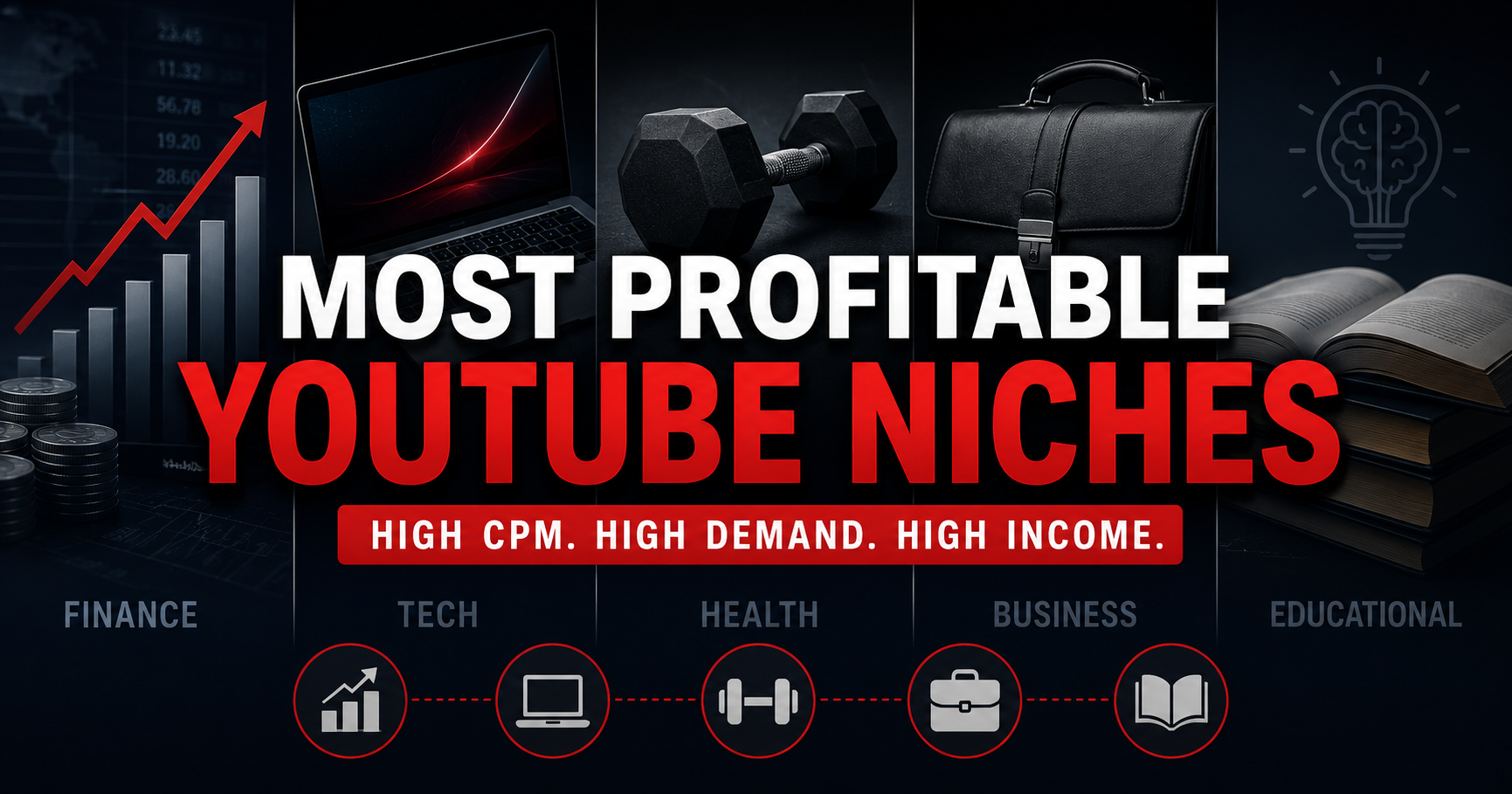
The best YouTube niches for 2026 combine high ad CPM, strong audience buying power, active sponsor and affiliate demand, and evergreen search appeal. Top performers include personal finance, tech reviews, health and fitness, online business, and faceless educational content. The right niche for you balances profit potential against your expertise and long-term interest.
Why Do Some YouTube Niches Pay 10× More Than Others?
Two channels with identical view counts can earn dramatically different revenue. A personal finance channel with 100,000 monthly views might earn $4,000 from ads alone, while a vlogging channel with the same view count earns $250. The difference is the audience advertisers want to reach. Ad networks pay premium CPMs for audiences with high disposable income, decision-making power, or specific buying intent. Niches attracting those audiences earn multiples of what entertainment or general lifestyle channels earn - even at smaller subscriber counts. Picking based on view count alone misses 90% of the actual revenue picture.
What Actually Makes a YouTube Niche Profitable in 2026?
Niche profitability depends on five interconnected factors. Most creators evaluate only one - passion or interest - and end up in saturated, low-CPM corners of YouTube. The five factors below tell you whether a niche is structurally profitable before you spend two years building in it.
Ad CPM and RPM differ wildly by niche
Ad CPM (what advertisers pay per thousand impressions) ranges from $1-$5 in entertainment and vlogs to $30-$50 in personal finance, business, and B2B software. RPM (revenue per thousand views to you) tracks CPM closely but accounts for ads-eligible viewers. We break the exact numbers down by niche in our companion guide on how much do YouTubers make? CPM & RPM explained by niche.
Audience buying power matters more than audience size
A small audience of B2B decision-makers monetizes better than a massive audience of teenagers. Buying power determines what advertisers, sponsors, and affiliate programs will spend to reach your viewers. High-buying-power audiences - business owners, finance enthusiasts, parents, homeowners - attract premium sponsors at a fraction of the channel size needed in lower-CPM niches. Audience quality beats audience scale almost every time.
Sponsor and affiliate demand
Some niches have entire industries built around reaching their viewers. Tech, finance, gaming, beauty, and fitness niches have hundreds of sponsors competing for creator partnerships. Other niches - niche hobbies, philosophy, true crime - have few or none. Before committing, search "[niche] YouTube sponsorship" and "[niche] affiliate program." If you find zero hits, that's a structural revenue ceiling you can't break through with effort.
Search demand and evergreen value
Niches driven by YouTube search demand build a compounding long tail - each video earns traffic for years. Niches driven only by algorithmic recommendation (entertainment, vlogs, reaction content) earn views for a few weeks then fade. Validate your candidate niche's search demand with the YouSEO Keyword Research tool before you commit. Evergreen search demand is the difference between a channel and an ongoing publishing business.
Evergreen versus trend-driven content
Evergreen niches deliver consistent search demand for years - "how to budget," "camera review," "basic Python." Trend-driven niches spike and fade - "AI startup news from this month" earns explosive short-term reach but no compounding value. The best YouTube niches for 2026 lean evergreen but include a trend dimension that gives you something fresh to publish weekly without exhausting the topic in six months.
What Are the Best YouTube Niches for 2026?
Based on CPM benchmarks, sponsor activity, and 2026 search trend data, these five niches consistently outperform. Each pays well, has an active sponsor ecosystem, and offers multiple monetization paths beyond AdSense alone.
1. Personal Finance and Investing
Why it pays: $25-$50 CPM driven by financial advertisers and brokerage sponsors. The audience makes purchasing decisions worth thousands of dollars. Strong affiliate ecosystem - credit cards, brokerages, investing platforms, tax software. Who it suits: creators with finance experience, accountants, former bankers, or skilled researchers. Saturation is real but sub-niches (international finance, retirement planning, side income) remain underserved with strong audience demand.
2. Tech Reviews and Tutorials
Why it pays: $10-$25 CPM with massive sponsor demand - every tech brand sponsors creators. Affiliate revenue from Amazon, B&H, and manufacturer programs. Who it suits: creators with hands-on tech experience and budget or sponsor access for hardware reviews. Sub-niches like budget tech, software tutorials, AI tools, and small business tech are easier entry points than broad consumer tech.
3. Health, Fitness, and Wellness
Why it pays: $15-$25 CPM with supplement, fitness equipment, and wellness app sponsors. Strong affiliate revenue from gear and programs. Who it suits: certified trainers, nutritionists, or creators with documented expertise (Google's E-E-A-T applies strictly to health niches). Best sub-niches: strength training for specific demographics, evidence-based nutrition, mobility, and mental health.
4. Online Business and Career Skills
Why it pays: $20-$35 CPM driven by SaaS, course, and freelance-platform sponsors. The audience has clear buying intent - they're already trying to earn or save money. Who it suits: creators with documented business or career experience. Sub-niches: freelancing, specific software (Excel, SQL, design tools), career-switching, productivity for knowledge workers. Sustained search demand and strong cross-platform reach into LinkedIn and newsletters.
5. Faceless and Educational Content
Why it pays: $8-$15 CPM but scalable production lets you publish more consistently. Strong with educational, history, science, and explainer formats using voiceover plus stock or animated visuals. Who it suits: creators uncomfortable on camera but skilled at writing or research. Best sub-niches: science explainers, history breakdowns, language learning, and document-driven storytelling. Lower CPM but lower production friction.
How Do You Pick the Right YouTube Niche for You?
Use this five-question framework before committing:
1. Passion vs. profit honesty check. Can you spend three hours a week reading about this niche without forcing yourself? If not, the burnout timeline is shorter than the revenue timeline.
2. Competition assessment. Run your top three candidate niches through a keyword research tool to see which has reachable competition for your authority level.
3. Expertise audit. Do you have a credible angle - experience, certification, or demonstrable skill - that lets a viewer trust you in three videos? If not, choose a sub-niche where your background fits.
4. Monetization paths inventory. Count sponsor programs, affiliate networks, and direct revenue paths in the niche. Three or more means structural profitability.
5. Five-year sustainability test. Will you still want to publish in this niche in 2031? If unsure, choose a broader umbrella that lets you pivot sub-niches without rebuilding.
How Should New Creators and Pivoting Creators Approach Niche Selection?
For brand-new creators
Pick the most profitable niche you can sustain authentically - not the most profitable niche overall. New creators have no audience momentum to fall back on, so authenticity and consistent publishing matter more than peak CPM. Pick a niche where your existing knowledge gives you an angle competitors don't have. A sub-niche of a profitable umbrella usually outperforms trying to break into the saturated top-level category.
For established creators pivoting to a more profitable niche
Don't abandon your audience. Pivot gradually - introduce the new niche over 5-10 uploads while still delivering value to your original audience. Open YouSEO Channel Analytics to see which existing topics already attract viewers with buying intent. Often you're sitting on a higher-CPM angle already; you just need to lean into it. Sudden pivots away from your established audience usually cost more subscribers than the new niche gains.
Frequently Asked Questions About the Best YouTube Niches
What's the highest-paying YouTube niche in 2026?
Personal finance leads on ad CPM ($25-$50 range), followed by online business and B2B software. CPM alone doesn't determine profitability - sponsor ecosystem strength and affiliate demand often matter more, especially for smaller channels.
Can you still grow on YouTube in saturated niches?
Yes, but only with a clear sub-niche angle. Broad finance, tech, or beauty channels face brutal competition. Channels carving out specific sub-niches - finance for nurses, tech for senior parents, beauty for skin conditions - grow faster than generalists in the same umbrella.
Should I pick a niche based on passion or money?
Both. Passion alone burns out before revenue arrives; money alone burns out before authenticity earns trust. The sweet spot is a niche where you have genuine interest, some existing expertise, and a profitable monetization structure. All three matter, not one.
How long until I can earn from a YouTube niche?
Most profitable channels reach AdSense monetization (1,000 subscribers, 4,000 watch hours) within 8-15 months in evergreen niches. Sponsor and affiliate revenue often arrives sooner - many channels earn from sponsors before YouTube ad revenue, sometimes within 6 months.
Should I switch niches if my current channel isn't growing?
Diagnose before switching. Audit retention, search rankings, and impressions data. Many channels that feel like "wrong niche" are actually right-niche-wrong-execution. If after three months of fixes your channel still doesn't move, then pivot - but gradually, never abruptly.
How Do You Lock In Your Niche Decision This Week?
Niche selection is a strategic decision that compounds for years. Spend a weekend running your top three candidates through the framework above before committing. The cost of picking right is one weekend of research. The cost of picking wrong is two years of building in the wrong place.
Validate niche demand and competition with the YouSEO Keyword Research tool before you commit to a topic, and use Channel Analytics to confirm which sub-niches resonate with viewers already searching for them. Try YouSEO free today.